How AI Speech Translation Works: A Complete Guide
Discover the technology behind AI speech translation, from speech recognition to voice synthesis. Learn how modern AI preserves your original voice characteristics across languages.
Artificial Intelligence has revolutionized the way we communicate across languages. AI speech translation technology, in particular, has made it possible to translate spoken content while preserving the original speaker's voice characteristics. But how does this remarkable technology actually work? In this comprehensive guide, we'll explore the complete process behind AI speech translation.
The Three-Stage Process
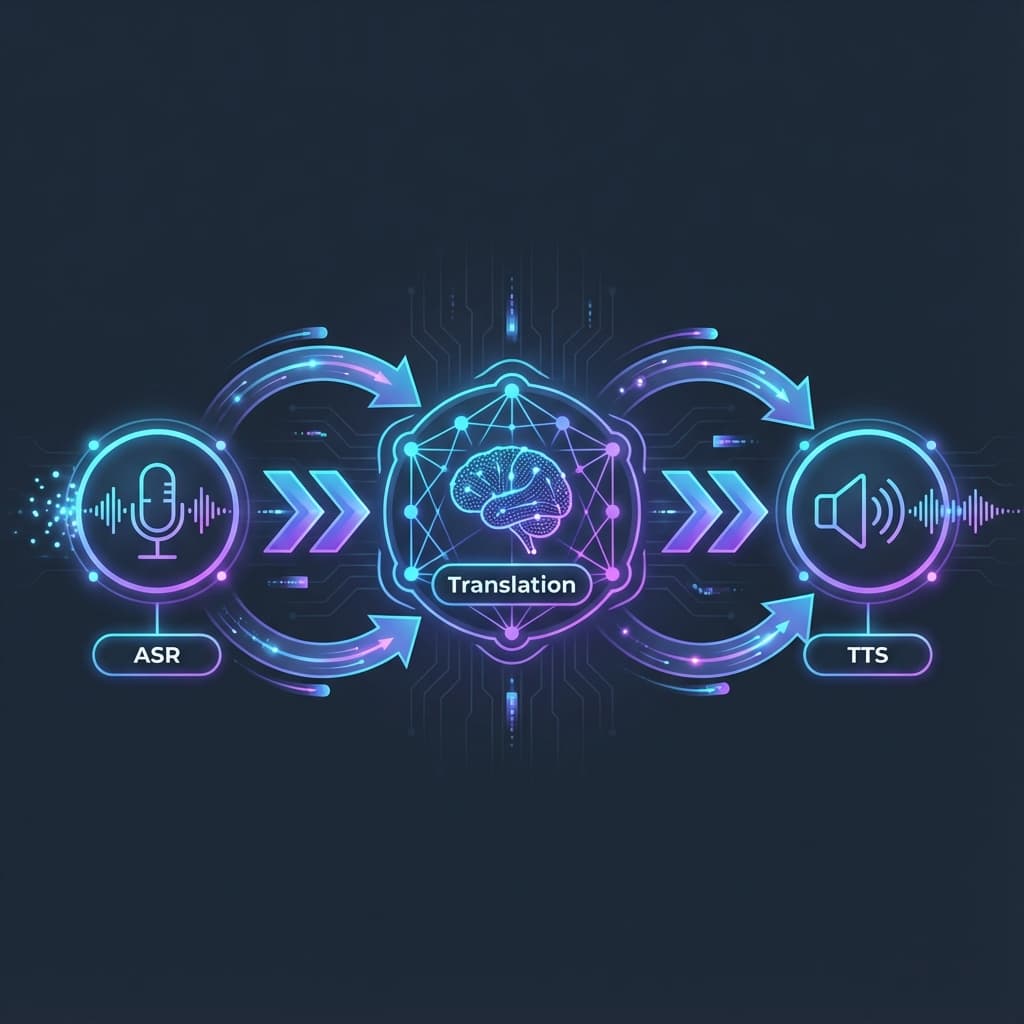
AI speech translation involves three main stages: speech recognition, text translation, and voice synthesis. Each stage uses advanced machine learning algorithms to ensure accurate and natural results.
Stage 1: Speech Recognition (ASR)
The first step in the process is Automatic Speech Recognition (ASR). This technology converts spoken audio into text. Modern ASR systems use deep neural networks trained on vast amounts of multilingual speech data.
How it works:
• The audio signal is broken down into small segments (typically 10-30 milliseconds)
• Each segment is analyzed for acoustic features like frequency, amplitude, and spectral characteristics
• A neural network processes these features to identify phonemes (the smallest units of sound)
• Phonemes are combined to form words, which are then assembled into sentences
• The system also automatically detects the source language
Key Technologies:
• Deep Neural Networks (DNNs) for pattern recognition
• Recurrent Neural Networks (RNNs) for sequence processing
• Transformer models for context understanding
• Language models for grammar and syntax
Stage 2: Text Translation
Once the speech has been converted to text, the next step is translation. This uses Neural Machine Translation (NMT) systems, which are trained on parallel text corpora in multiple languages.
How it works:
• The source text is analyzed for meaning and context
• A neural network encoder converts the text into a semantic representation
• A decoder generates the translation in the target language
• The system considers context, idioms, and cultural nuances
• Multiple translation candidates are evaluated, and the best one is selected
Key Technologies:
• Transformer architecture for attention mechanisms
• Encoder-decoder models for sequence-to-sequence translation
• Large language models (LLMs) for better context understanding
• Fine-tuning on domain-specific data for accuracy
Stage 3: Voice Synthesis (TTS) with Voice Preservation
The final and most complex stage is Text-to-Speech (TTS) synthesis that preserves the original voice characteristics. This is where the magic happens - maintaining the speaker's unique voice tone, emotion, and speaking style.
How it works:
• The system extracts voice characteristics from the original audio:
* Voice timbre (the unique quality of the voice)
* Pitch and intonation patterns
* Speaking speed and rhythm
* Emotional tone and expressiveness
* Accent and pronunciation style
• These characteristics are encoded into a voice embedding
• A neural vocoder generates the audio waveform using:
* The translated text
* The extracted voice characteristics
* Linguistic features of the target language
• The result is natural-sounding speech in the target language that sounds like the original speaker
Key Technologies:
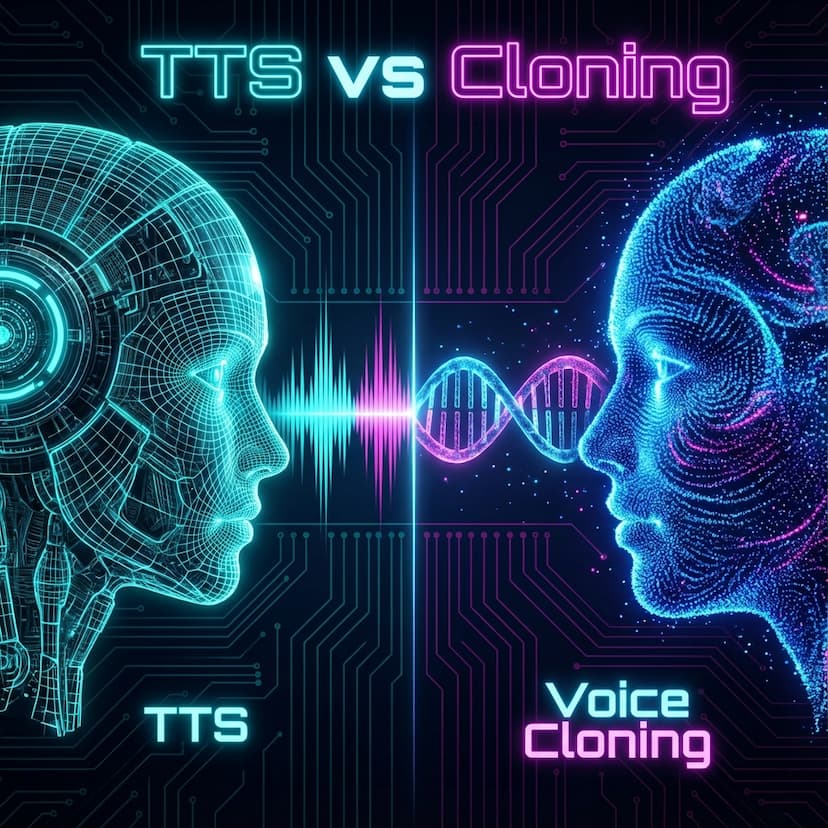
• Voice cloning models for voice characteristic extraction
• Neural vocoders for high-quality audio generation
• Prosody models for natural intonation
• Multi-speaker TTS systems
• Zero-shot voice cloning for preserving unseen voices
The Technology Stack
Modern AI speech translation systems use a combination of several advanced technologies:
Deep Learning Models
• Convolutional Neural Networks (CNNs): For feature extraction from audio
• Recurrent Neural Networks (RNNs): For sequential processing
• Transformers: For attention-based processing and context understanding
• Generative Adversarial Networks (GANs): For high-quality audio synthesis
Cloud Infrastructure
• Distributed computing for parallel processing
• GPU acceleration for neural network inference
• Scalable storage for audio files
• Real-time processing capabilities
Challenges and Solutions
Challenge 1: Accent and Dialect Variations
Solution: Training on diverse datasets with multiple accents and dialects from different regions.
Challenge 2: Background Noise
Solution: Advanced noise reduction algorithms and robust feature extraction that focuses on speech signals.
Challenge 3: Emotional Preservation
Solution: Emotion-aware models that detect and preserve emotional cues from the original speech.
Challenge 4: Real-time Processing
Solution: Optimized models and efficient inference pipelines that balance quality and speed.
Applications of AI Speech Translation
AI speech translation has numerous practical applications:
• Business Communication: Translating meeting recordings and presentations
• Content Creation: Creating multilingual versions of podcasts and videos
• Education: Translating educational content while preserving instructor's voice
• Customer Service: Providing multilingual support with consistent voice
• Media Production: Dubbing and localization of audio-visual content
The Future of AI Speech Translation
The technology is continuously evolving. Future improvements may include:
• Better Voice Preservation: More accurate capture of subtle voice characteristics
• Faster Processing: Real-time translation with minimal latency
• More Languages: Support for more languages and dialects
• Better Quality: More natural-sounding translations
• Emotion Preservation: Better capture and transfer of emotional nuances
Conclusion
AI speech translation is a complex but fascinating technology that combines speech recognition, machine translation, and voice synthesis. By understanding how it works, users can better appreciate the technology and use it more effectively.
At VoiceOver Speech, we use state-of-the-art AI technology to provide high-quality speech translation services that preserve your unique voice characteristics. Whether you're creating multilingual content or communicating across language barriers, our platform makes it easy and natural.
Ready to experience AI speech translation? Try VoiceOver Speech today and see how it can transform your multilingual communication.