How Voice Preservation Technology Captures Your Unique Sound
A technical exploration of speaker embeddings and neural vocoders.
When you speak, your voice carries a fingerprint unlike any other. The precise resonance of your vocal tract, the subtle breathiness between syllables, the rhythm of your speech — these characteristics are as unique as your DNA. Voice preservation technology exists to capture that fingerprint mathematically and reproduce it faithfully, even across languages you have never spoken.
What Are Speaker Embeddings?
At the heart of voice preservation lies the concept of a speaker embedding — a compact numerical vector, typically 192 to 512 dimensions, that encodes the identity of a speaker independent of what they are saying. Think of it as a coordinate in a high-dimensional space where every speaker occupies a unique neighborhood, and voices that sound similar cluster closer together.
The earliest practical speaker embeddings were d-vectors, produced by training a deep neural network to classify thousands of speakers. After training, the network's penultimate layer activations — the d-vector — generalized well to unseen speakers. While effective, d-vectors struggled with short utterances and noisy environments because they accumulated evidence linearly across time.
x-Vectors and the Power of Statistics
The x-vector framework, introduced by researchers at Johns Hopkins University, addressed this weakness by inserting a statistics pooling layer that computes the mean and standard deviation of frame-level features across the entire utterance. This produces a fixed-size representation regardless of audio length and captures temporal variability that d-vectors missed. x-vectors became the dominant approach in speaker verification benchmarks from 2018 onward.
ECAPA-TDNN: The Current State of the Art
Today, the most widely deployed architecture for speaker embeddings is ECAPA-TDNN (Emphasized Channel Attention, Propagation, and Aggregation in Time Delay Neural Networks). ECAPA-TDNN introduces multi-scale feature aggregation across different temporal receptive fields, squeeze-and-excitation blocks that recalibrate channel importance, and dense connections that allow gradient flow from early layers to the final embedding. On the VoxCeleb benchmark, ECAPA-TDNN achieves equal error rates below 1%, meaning it correctly matches speakers with over 99% accuracy even from short audio clips.
Neural Vocoders: Turning Embeddings into Sound
A speaker embedding alone cannot produce audio — it needs a vocoder, a synthesis engine that converts acoustic features back into a time-domain waveform. Traditional vocoders like Griffin-Lim produced a characteristic buzzy, robotic quality. Neural vocoders changed everything.
WaveGlow, released by NVIDIA in 2018, uses normalizing flows to learn the direct mapping from mel-spectrograms to raw audio. Because it is fully invertible, WaveGlow generates audio with remarkably natural prosody. However, its 87-million-parameter architecture requires significant GPU memory, making real-time inference expensive on consumer hardware.
HiFi-GAN (High Fidelity Generative Adversarial Network) solves the efficiency problem by replacing the flow-based model with a generator network and a set of multi-period and multi-scale discriminators. The discriminators are trained to detect both fine-grained artifacts in individual waveform periods and coarse spectral mismatches, pushing the generator to produce perceptually indistinguishable audio. HiFi-GAN V1 achieves a Mean Opinion Score (MOS) of 4.44 on the LJ Speech benchmark — near human parity — while running at 167× real-time on a V100 GPU.
Fine-Tuning for Voice Adaptation
Raw speaker embeddings capture identity at inference time, but fine-tuning the synthesis model on a target speaker's recordings produces dramatically better results. The typical pipeline involves pre-training a multi-speaker TTS model on thousands of hours of diverse speech, then fine-tuning the decoder layers — while freezing the encoder and vocoder — on as little as 5 minutes of target speech. This transfer learning approach preserves linguistic knowledge while adapting acoustic character, meaning the synthesized voice retains the speaker's timbre even when uttering sentences they never recorded.
Techniques like low-rank adaptation (LoRA) further reduce the number of trainable parameters during fine-tuning, making it feasible to maintain separate voice adapters for many users without storing full model copies for each.
Cross-Lingual Voice Preservation Challenges
Preserving a speaker's voice across languages is fundamentally harder than monolingual synthesis. Languages differ in their phoneme inventories, prosodic patterns, and coarticulation rules. A speaker of Mandarin produces retroflex consonants and tonal contours that a French TTS system was never trained to generate.
Modern solutions use language-agnostic speaker encoders trained on multilingual corpora, so the embedding captures vocal tract shape and speaking style without entangling language-specific features. The synthesis model is then trained with language conditioning, allowing it to apply the correct phonology for the target language while drawing timbre from the speaker embedding. Despite these advances, cross-lingual voice similarity scores typically fall 8–15% below same-language baselines, and ongoing research focuses on closing this gap through larger multilingual pre-training datasets.
Evaluation Metrics: How Do We Know It Sounds Like You?
The gold standard for evaluating synthesized speech is the Mean Opinion Score (MOS), where human listeners rate audio naturalness on a 1–5 scale. While informative, MOS is expensive to collect at scale and suffers from listener variability. Automated metrics have therefore become essential.
Speaker similarity scores are computed by passing both the original and synthesized utterances through a speaker encoder and measuring the cosine similarity of their embeddings. A score above 0.85 typically indicates the synthesized voice is perceptually indistinguishable from the original. DNSMOS and UTMOS offer neural MOS predictors that correlate highly with human ratings without requiring listener panels.
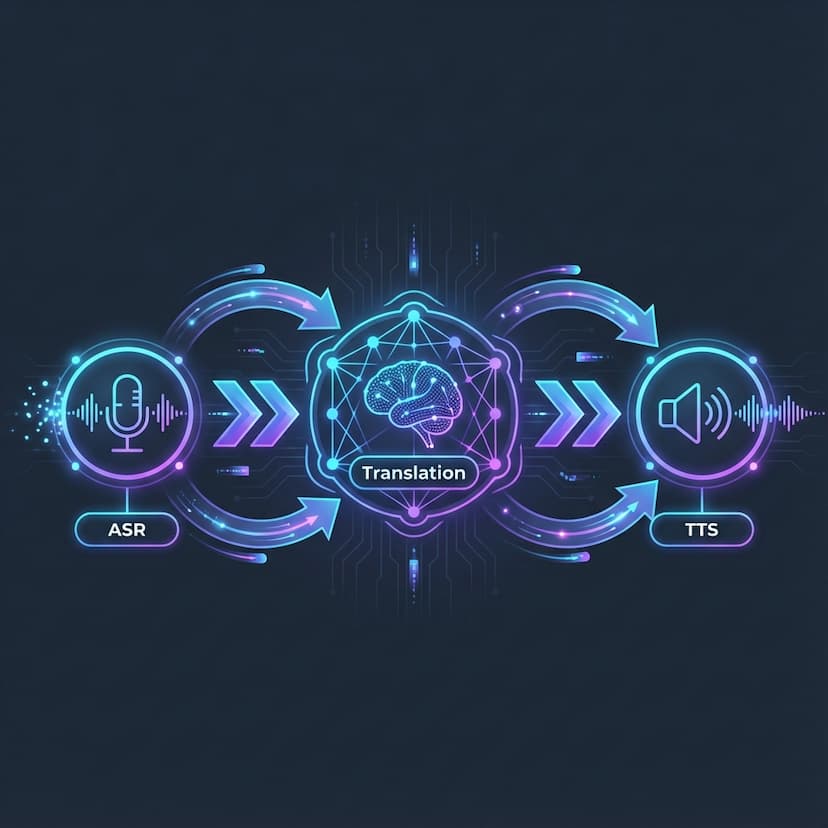
Together, these metrics form a comprehensive evaluation suite: naturalness (MOS or UTMOS), speaker fidelity (cosine similarity), and intelligibility (word error rate of an ASR system on the synthesized audio). The best voice preservation systems score above 4.0 on naturalness and above 0.87 on speaker similarity simultaneously.
The Road Ahead
Research is rapidly moving toward zero-shot voice cloning — preserving any speaker's voice from a single 3-second sample — and toward real-time streaming synthesis that introduces less than 200 ms of latency. As these technologies mature, the ability to speak in any language while sounding unmistakably like yourself is becoming a practical reality rather than a research milestone.
Ready to experience voice preservation technology firsthand? Try the dashboard and translate your speech while keeping your unique vocal identity intact.